
Fu uno di quei delitti che fecero scattare qualcosa. Era il 1971, a Genova. In via Bernardo Castello, al 3, si consuma una delle tante rapine di quegli anni di paura, in cui anche da passante poteva capitarti di non tornare a casa. Sono le 10,50. Piove leggermente. Sedici milioni di lire di paghe dell’Istituto Autonomo Case Popolari: stanno in una borsa appena prelevata da un funzionario e un fattorino. I rapinatori scappano in due, a volto scoperto, per le scale di via Castello, poi su una Lambretta bianca che li aspetta in via Banderali. Il fattorino Alessandro Floris, 31 anni, si butta dietro ai banditi. Gli gridano di fermarsi, che quelli sono armati. Gli risponde una Smith & Wesson calibro 38. Floris cade e da terra cerca di aggrapparsi fino alla fine al motorino. Gli sparano ancora. Parte l’inseguimento della gente comune per le strade di Genova, arriva l’ambulanza. Floris non ce la fa. Prima una 850 e poi una Porsche tallonano la Lambretta fino a piazza De Ferrari, dove i due banditi si dividono. Poi quello che ha sparato viene arrestato per strada.
Ci sono due testimoni. Uno è il capo del personale, Giuseppe Montaldo. E un altro è uno studente universitario di 25 anni, Ilio Galletta, che prende la sua Nikon nuova di zecca che sta là, sul tavolo, e scatta al volo delle foto rimaste famose nella loro drammaticità. Foto che inchiodano Mario Rossi, capo della banda XXII Ottobre, arrestato dopo l’inseguimento; e Giuseppe Battaglia, collega della vittima e basista della rapina. Si scopre però che la banda è anche responsabile del sequestro di Sergio Gadolla, un colpo che aveva molto scosso la città. Andranno a processo anche per quello. Rossi, Battaglia e tutti gli altri membri della XXII Ottobre vengono condannati. Rossi, che aveva sparato, all’ergastolo. Uscirà nel 2002 e si metterà a fare l’imbalsamatore.
Fonte
NeroCrime.com
Approfondimenti
da La Repubblica
UgoMariaTassinari.it
26 marzo 1971: l’omicidio del fattorino Floris segna la fine della banda 22 ottobre
Video
Castelvecchi Editore
26 marzo 1971, 50 anni dalla morte di Alessandro Floris – Banda XXII Ottobre
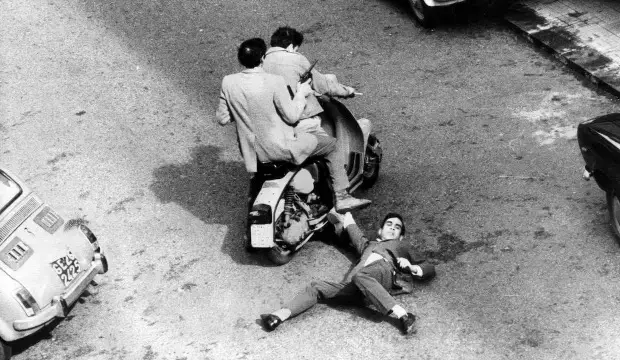
da Nero Crime
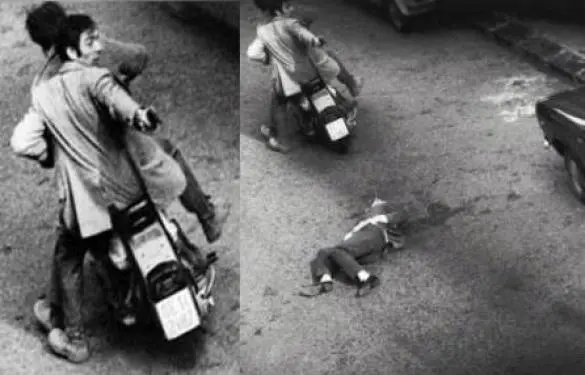
da UgoMariaTassinari.it
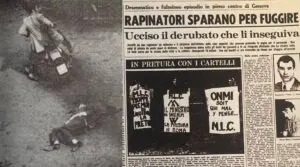
da NeroCrime
English version
It was one of those crimes that triggered something. It was 1971, in Genoa. In via Bernardo Castello, at 3, one of the many robberies of those years of fear took place, in which even as a passer-by you could end up not returning home. It’s 10.50. It’s raining lightly. Sixteen million lire in wages from the Istituto Autonomo Housing Popolari: they are in a bag just taken by an official and a deliveryman. The robbers escape in two, with their faces uncovered, down the stairs in via Castello, then on a white Lambretta that awaits them in via Banderali. The delivery man Alessandro Floris, 31 years old, throws himself after the bandits. They shout at him to stop, that they are armed. The answer is a 38 caliber Smith & Wesson. Floris falls and from the ground tries to cling to the scooter until the end. They shoot him again. The chase of ordinary people begins through the streets of Genoa, the ambulance arrives. Floris can’t do it. First an 850 and then a Porsche tail the Lambretta until Piazza De Ferrari, where the two bandits split up. Then the one he shot is arrested on the street.
There are two witnesses. One is the head of personnel, Giuseppe Montaldo. And another is a 25-year-old university student, Ilio Galletta, who takes his brand new Nikon that is there on the table and quickly takes photos that have remained famous for their drama. Photos that nail Mario Rossi, leader of the XXII Ottobre gang, arrested after the chase; and Giuseppe Battaglia, colleague of the victim and basis of the robbery. However, it turns out that the gang is also responsible for the kidnapping of Sergio Gadolla, a coup that had greatly shaken the city. They will go to trial for that too. Rossi, Battaglia and all the other members of XXII Ottobre are condemned. Rossi, who had been shot, to life in prison. He will leave in 2002 and start working as a taxidermist.
