
La strage della Questura di Milano
È il 17 maggio 1973, un uomo percorre il tratto che da piazza Duomo a Milano conduce a via Fatebenefratelli, la sede della questura, dove si sta tenendo la commemorazione del dirigente della squadra politica della questura, ucciso un anno prima, Luigi Calabresi, il commissario “Finestra” come lo chiamano extraparlamentari e anarchici. L’accusa è quella di avere “suicidato”, gettandolo da una finestra della questura, l’anarchico Giuseppe Pinelli. Era stato fermato dagli inquirenti nell’ambito delle indagini per la strage di piazza Fontana del 12 dicembre 1969. Sono passati quattro anni dall’episodio, ma la ferita è ancora aperta, perché il processo è in corso e perché gli anni Settanta sono anni di grandi divisioni politiche.
A commemorare Calabresi a Milano c’è Mariano Rumor, che è ministro dell’interno, proprio come lo era il giorno della strage alla Banca nazionale dell’agricoltura. Sono passati quasi quattro anni, ma molte cose sono cambiate. La violenza politica è aumentata. Il 12 aprile, proprio a Milano, è stato ucciso da una bomba a mano, lanciata da alcuni manifestanti di estrema destra, l’agente di polizia Antonio Marino. Così come sta girando armato l’uomo che da piazza Duomo sta andando alla commemorazione dell’omicidio Calabresi. Reca con sé una bomba a mano “ananas”, che scaglierà a breve contro un gruppo di persone. L’episodio sarà ricordato nei libri di storia come la strage della Questura.
«Verso le ore 11:00 di ieri, – recita il primo rapporto giudiziario sulla strage – al termine della cerimonia per lo scoprimento del busto del Commissario Capo di P.S. dr. Luigi Calabresi, avvenuta nel cortile della Questura di Milano, un individuo, che sostava sul marciapiedi opposto a quello dove è ubicato l’ingresso della Questura stessa, ha lanciato in direzione dell’ingresso medesimo un ordigno, che è esploso. La Forza pubblica in servizio sul posto ha subito tratto in arresto l’attentatore, il quale, dopo essere stato sottratto ad un tentativo di linciaggio da parte dei numerosi presenti, è stato portato negli uffici della Questura. Qui è stato trovato in possesso, tra l’altro, di un passaporto intestato a tale MAGRI Massimo, nato a Bergamo il 30.7.1942, che lo stesso attentatore ha subito indicato come falso. Egli ha quindi dichiarato oralmente di chiamarsi Bertoli Gianfranco, in oggetto indicato, e di essere arrivato a Milano la sera precedente proveniente da Haifa, via Marsiglia. La deflagrazione ha provocato la morte di Bartolon Gabriella, nata a Milano il 6.1.1950 ed il ferimento di altre 42 persone, generalizzate nell’allegato elenco».
In realtà le persone uccise sono 4
Di questa vicenda sono gli unici dati certi, perché sta per cominciare una storia fatta di menzogne, ritrattazioni e fantasie, che non trovano conferme. La storia di Gianfranco Bertoli, l’uomo che morirà dopo quasi trent’anni dalla strage, portando con sé uno dei più grandi misteri della storia d’Italia, ma che allo stesso tempo è ancora egli stesso un mistero mai svelato. Perché davvero abbia gettato quella bomba, dove l’abbia trovata e soprattutto se l’abbia fatto da solo, sono i grandi dubbi che ancora aleggiano su questa vicenda. Bertoli finisce a processo, viene condannato all’ergastolo, ma la vicenda non è finita, perché la questione giudiziaria si trascina fino agli anni Novanta. Tanto per cominciare non è chiaro se vi siano delle complicità. Chi ha armato l’attentatore? Perché tante bugie? Ma soprattutto perché tante incongruenze? Bertoli dice di avere frequentato gli anarchici veneziani, ma anche qui non ci sono riscontri. Tutti lo ricordano come un delinquente comune, con due o tre amici nell’estrema destra. Ma a margine emergono altre novità. Per esempio Bertoli è stato fino al 1960 una fonte del servizio segreto Sifar con il nome in codice “Negro”. La fonte sarebbe stata disattivata , ma nulla impedisce che possa essere stata riattivata.
Ma non solo, la notizia rimarrà ammantata di mistero, ma il terrorista sarebbe stato in forza a Gladio, la struttura parallela di difesa dal comunismo attiva in Italia fin dal 1956. Il suo nome non rientra negli elenchi “ufficiali”, resi noti nel 1990, ma è sempre stato forte il sospetto che ci fosse un elenco mai reso pubblico.
Anni ‘90. Sono passati più di vent’anni da quella strage. Le bombe che insanguinano l’Italia ci sono ancora. Ora le mette la mafia. Ma nei corridoi di Palazzo di Giustizia si lavora ancora sulle indagini degli anni Settanta. Anche perché qualcosa si è mosso. Il velo è stato squarciato da Vincenzo Vinciguerra, che già da tempo in Veneto parla di Ordine Nuovo, di contatti con i servizi segreti e con la Cia, e addirittura di una rete internazionale, dedita all’eversione.
Vinciguerra, che è già stato condannato, è una colata di rivelazioni. Parla. E tanto. Anche di quando gli ordinovisti veneti, gli chiesero di commettere l’omicidio di Mariano Rumor. L’ex esponente democristiano doveva essere punito, per aver avuto paura di dichiarare lo stato di emergenza all’indomani della strage di piazza Fontana. C’erano degli accordi con alcuni apparati dello stato. Dopo le bombe di Milano e Roma andava dichiarato lo stato di emergenza e i militari avrebbero preso il potere. Ma i troppi morti (nessuno si aspettava una strage) hanno suscitato l’indignazione pubblica. Dopo aver assistito ai funerali Rumor fece un passo indietro. E per questo doveva pagare. Vinciguerra si rifiuta di commettere l’attentato, ma gira voce che gli ordinovisti veneti stiano ripiegando su Bertoli, uomo definito «pronto a tutto». Il colpevole ideale, uno sprovveduto, facile all’alcol, che può facilmente essere fatto passare per anarchico.
Vinciguerra non è l’unico a parlare. Negli anni Novanta anche Carlo Digilio, detto “Zio Otto” conferma che c’è la volontà di colpire Rumor. L’uomo perfetto per l’operazione è proprio Bertoli, istruito dagli ordinovisti. È abbastanza per riaprire un processo che vedrà Bertoli condannato insieme ai due vertici di Ordine Nuovo: Delfo Zorzi, e Carlo Maria Maggi. L’appello ribalterà la sentenza e la cassazione lo confermerà: Bertoli per la giustizia italiana è l’unico colpevole.
Fonte
irpimedia.irpi.eu
https://irpimedia.irpi.eu/archivicriminali-gianfranco-bertoli/
Approfondimenti
Wikipedia
https://it.wikipedia.org/wiki/Strage_della_Questura_di_Milano
Gianfranco Bertoli – Wikipedia
Arivista
https://www.arivista.org/?nr=202&pag=202_13.htm
Sound
Radio radicale – Le udienze del processo
Processo per la strage del 17 maggio 1973 alla Questura di Milano | Radio Radicale
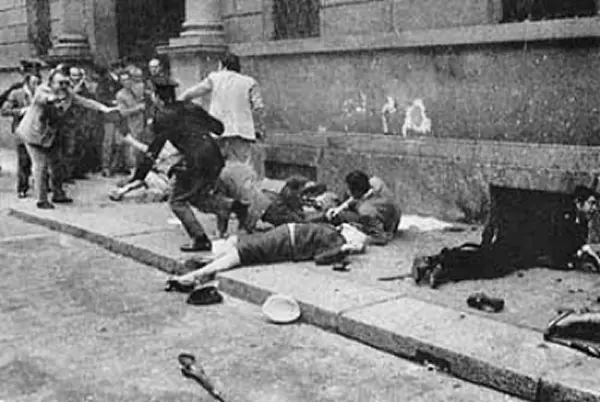
da Wikipedia
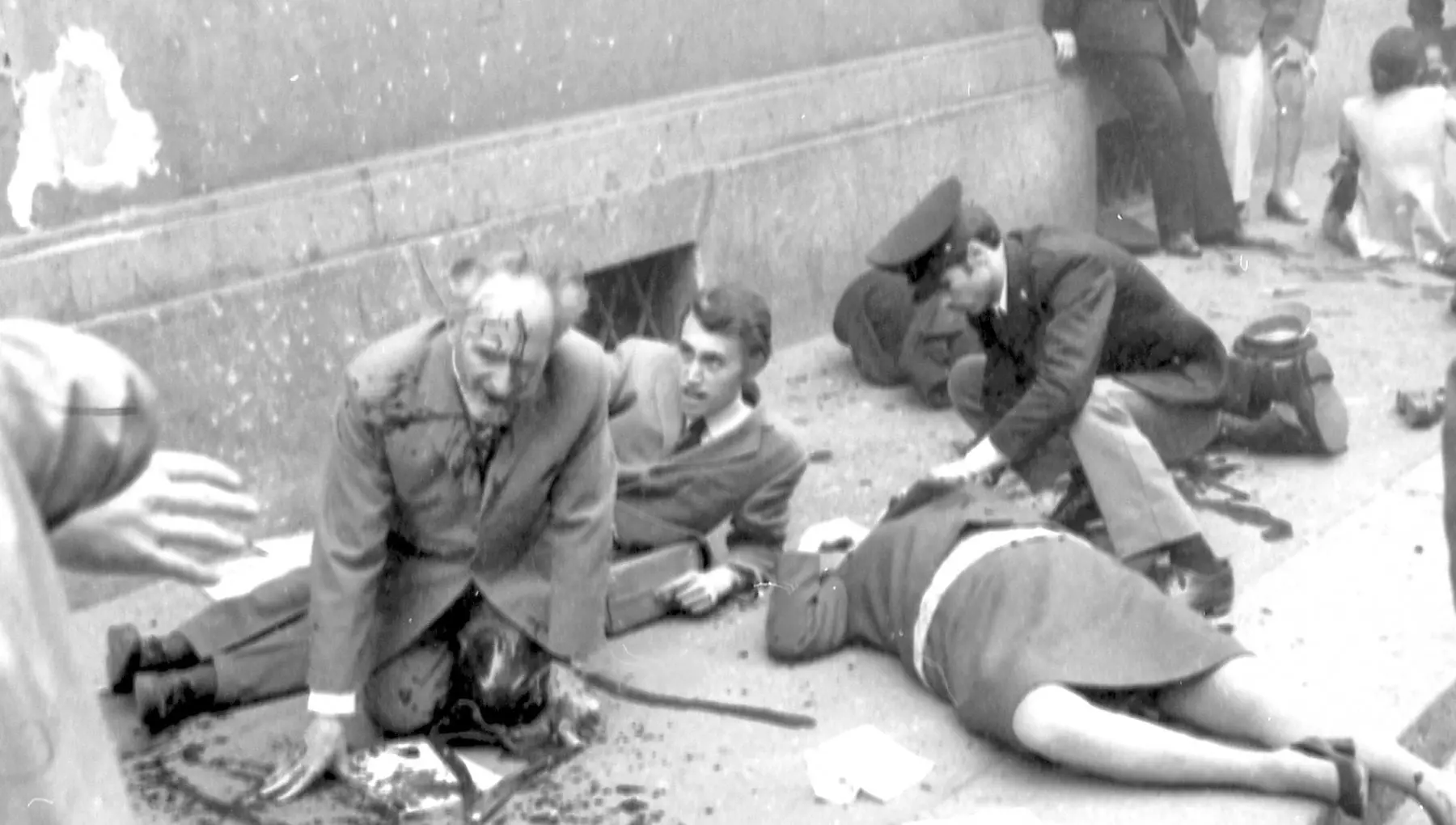
da la Repubblica
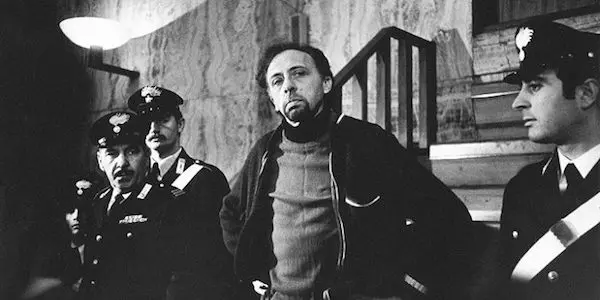
Gianfranco Bertoli da Mediterraneo Cronaca
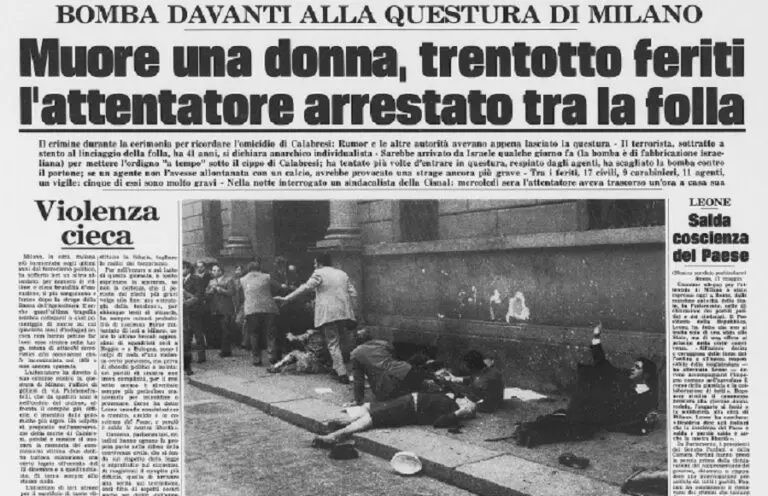
da vistosulweb
English Version
The massacre at the Milan Police Headquarters
It is May 17, 1973, a man walks along the stretch that leads from Piazza Duomo in Milan to Via Fatebenefratelli, the headquarters of the police headquarters, where the commemoration of the leader of the political team of the police headquarters, killed a year earlier, Luigi Calabresi, is being held. commissioner “Window” as extra-parliamentarians and anarchists call him. The accusation is that of having “committed suicide” by throwing him from a window of the police station, the anarchist Giuseppe Pinelli. He had been stopped by investigators as part of the investigation into the Piazza Fontana massacre on 12 December 1969. Four years have passed since the episode, but the wound is still open, because the trial is ongoing and because the Seventies were years of major political divisions.
Commemorating Calabresi in Milan is Mariano Rumor, who is Minister of the Interior, just as he was on the day of the massacre at the National Bank of Agriculture. Almost four years have passed, but many things have changed. Political violence has increased. On April 12, in Milan, police officer Antonio Marino was killed by a hand grenade thrown by some far-right demonstrators. Just as the man who is going from Piazza Duomo to the commemoration of the Calabresi murder is walking around armed. He carries with him a “pineapple” hand grenade, which he will soon throw at a group of people. The episode will be remembered in the history books as the Police Headquarters massacre.
«Around 11:00 yesterday – states the first judicial report on the massacre – at the end of the ceremony for the unveiling of the bust of the Chief Police Commissioner. dr. Luigi Calabresi, which took place in the courtyard of the Milan Police Headquarters, an individual, who was standing on the pavement opposite to the one where the entrance to the Police Headquarters is located, threw a bomb in the direction of the entrance itself, which exploded. The police on duty immediately arrested the attacker, who, after being rescued from a lynching attempt by the numerous people present, was taken to the police headquarters. Here he was found in possession, among other things, of a passport registered to a certain MAGRI Massimo, born in Bergamo on 7/30/1942, which the attacker himself immediately indicated as false. He then orally declared that his name was Bertoli Gianfranco, in the subject indicated, and that he had arrived in Milan the previous evening from Haifa, via Marseille. The explosion caused the death of Bartolon Gabriella, born in Milan on 6.1.1950 and the wounding of 42 other people, generalized in the attached list”.
In reality, 4 people were killed.
These are the only certain facts about this affair, because a story of lies, retractions and fantasies, which cannot be confirmed, is about to begin. The story of Gianfranco Bertoli, the man who will die almost thirty years after the massacre, bringing with him one of the greatest mysteries in the history of Italy, but who at the same time is still himself a mystery that has never been revealed. Why he actually threw that bomb, where he found it and above all whether he did it alone, are the great doubts that still hover over this affair. Bertoli ends up on trial, he is sentenced to life imprisonment, but the story is not over, because the judicial issue drags on until the 1990s. To begin with, it is not clear whether there is any complicity. Who armed the attacker? Why so many lies? But above all, why so many inconsistencies? Bertoli says he frequented Venetian anarchists, but here too there is no confirmation. Everyone remembers him as a common criminal, with two or three friends on the far right. But other news emerges on the sidelines. For example, Bertoli was until 1960 a source for the Sifar secret service with the code name “Negro”. The source would have been deactivated, but nothing prevents it from being reactivated.
But not only that, the news will remain cloaked in mystery, but the terrorist would have been part of Gladio, the parallel defense structure against communism active in Italy since 1956. His name is not included in the “official” lists, made known in 1990 , but there has always been a strong suspicion that there was a list that was never made public.
90’s. More than twenty years have passed since that massacre. The bombs that bloodied Italy are still there. Now the mafia puts them. But in the corridors of the Palace of Justice, work is still being done on the investigations of the 1970s. Also because something has moved. The veil was torn by Vincenzo Vinciguerra, who for some time in Veneto has been talking about the New Order, contacts with the secret services and the CIA, and even an international network dedicated to subversion.
Vinciguerra, who has already been convicted, is a casting of revelations. Speaks. It’s a lot. Even when the Venetian Ordinovists asked him to commit the murder of Mariano Rumor. The former Christian Democrat leader should have been punished for being afraid to declare a state of emergency in the aftermath of the Piazza Fontana massacre. There were agreements with some state apparatus. After the bombs in Milan and Rome, a state of emergency had to be declared and the military would have taken power. But the too many deaths (no one expected a massacre) sparked public indignation. After attending the funeral Rumor took a step back. And for this he had to pay. Vinciguerra refuses to commit the attack, but there are rumors that the Venetian Ordinovists are falling back on Bertoli, a man defined as “ready for anything”. The ideal culprit, a naive person, prone to alcohol, who can easily be passed off as an anarchist.
Vinciguerra is not the only one speaking. In the nineties, Carlo Digilio, known as “Uncle Otto”, also confirmed that there was a desire to attack Rumor. The perfect man for the operation is Bertoli himself, trained by the Ordinovists. It is enough to reopen a trial that will see Bertoli condemned together with the two leaders of Ordine Nuovo: Delfo Zorzi, and Carlo Maria Maggi. The appeal will overturn the sentence and the Supreme Court will confirm it: according to Italian justice, Bertoli is the only guilty party.
