
La notte del 12 giugno del 1975 venne freddato con due colpi d’arma di fuoco il giovane esponente di Lotta Continua Alceste Campanile. Lo conoscevo bene. Era reggiano e studente, come me, all’Università di Bologna. Qualche volta avevamo suonato la chitarra insieme, con un amico comune. In qualche bettola di periferia, immersi fino al collo entrambi tra musica e politica. Era appena tornato da un esame, superato brillantemente, aveva lasciato il libretto universitario sotto l’uscio di casa e si era diretto verso una discoteca di Montecchio, tra Parma e Reggio, molto frequentata dai giovani. Il suo corpo è stato ritrovato in una stradina di campagna a metà strada tra Sant’Ilario e Montecchio.
Alceste aveva militato nel Fronte della gioventù, organizzazione di estrema destra, prima di aderire a Lotta Continua e la prima sensazione che ci pervase fu quella della consumazione di una feroce vendetta di stampo fascista verso un ragazzo accusato di tradimento. Nel pomeriggio si tenne una grande manifestazione, promossa dal comitato antifascista, in cui noi giovani socialisti ci battemmo, contrastando su questo i comunisti, perché anche gli esponenti di Lotta continua potessero parlare. Il giorno del funerale decine di migliaia di militanti di Lotta Continua, con Adriano Sofri in prima linea, tennero un’imponente manifestazione inneggiando però anche alla lotta armata.
Da allora la magistratura si è imbattuta nel muro di silenzi e sospetti, prevalentemente animati dal padre di Alceste, che si orientavano verso la parte opposta rispetto a quella preventivata. In particolare negli ambienti bolognesi dell’estremismo venne riportata all’ex dirigente di Lotta continua Marco Boato una ricorrente intimazione a stare attenti, si disse, “altrimenti farai la fine di Alceste Campanile”. Si cercarono responsabilità soprattutto in quell’area dell’estremismo armato che serviva per la vigilanza di Lotta Continua, si ipotizzò anche un rapporto stretto tra il sequestro e il delitto Saronio e quello di Alceste. Si dichiarò che parte del denaro sarebbe transitato da Reggio e proprio da Alceste.
Mai nessun pentito, fino al 1999, ebbe qualcosa di concreto da dichiarare sul delitto Campanile, contrariamente a tutti gli altri. Si pensò dunque ad un omicidio molto particolare. Poi, appunto nel 1999, Paolo Bellini, coinvolto in delitti di mafia, elemento di estrema destra, in combutta con pezzi di servizi segreti deviati, fuggito in Brasile e tornato in Italia sotto falso nome, dopo il suo arresto avvenuto in un noto ristorante reggiano, ha aperto il sacco confessando di essere stato lui, assieme a un suo compagno di Avanguardia nazionale, ad uccidere Campanile su ordine di un terzo, un noto leader di Avanguardia nazionale. Il movente tornava ad essere quello dei tradimento e si aggiungeva quello di un attentato non riuscito che Campanile avrebbe ordito contro l’abitazione dei Bellini.
Però gli altri due chiamati in causa da Bellini sono stati assolti. Dunque la sua resta una verità incompleta visto che le pistole che spararono furono due. Ammesso che Bellini abbia detto la verità, visto che per il delitto Campanile non ha dovuto scontare nemmeno una condanna, perché i 22 anni del processo ultimato nel 2007 sono andati in prescrizione, e visto che di delitti ne aveva commessi otto o nove, certificati e dunque anche gli anni comminati non avrebbero appesantito più di tanto la sua posizione, restano ancora tante domande.
Fonte
Testimonianza di Mauro Del Bue* del 10 giugno 2015 su 7per24.it
40 anni fa veniva ucciso Alceste Campanile – Reggio Emilia e dintorni – 7per24
*dal 2013 direttore del quotidiano online L’Avanti
Approfondimenti
Il Foglio
L’omicidio di Alceste Campanile e il filo nero che lo lega alla strage di Bologna | Il Foglio
Wikipedia
Omicidio di Alceste Campanile – Wikipedia
Ugo Maria Tassinari
12 giugno 1975, Reggio Emilia. Il fascista Bellini uccide Alceste Campanile
Video
BluNotte
Blu notte – Misteri italiani: Alceste Campanile – Video Dailymotion
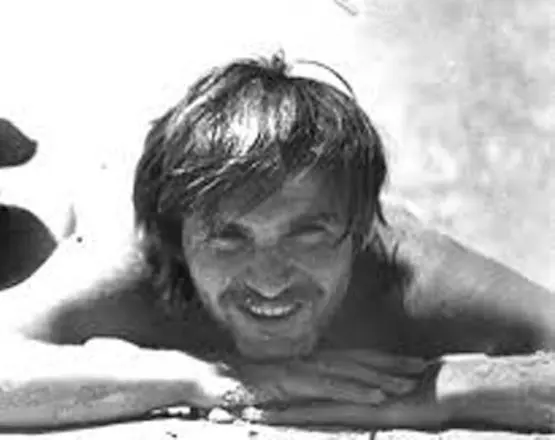
da Ugo Maria Tassinari
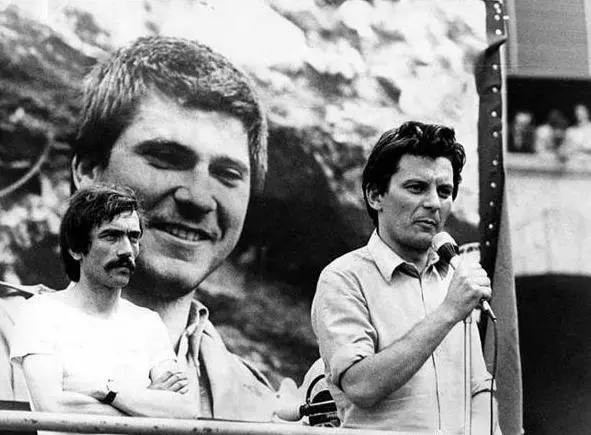
da Wikipedia
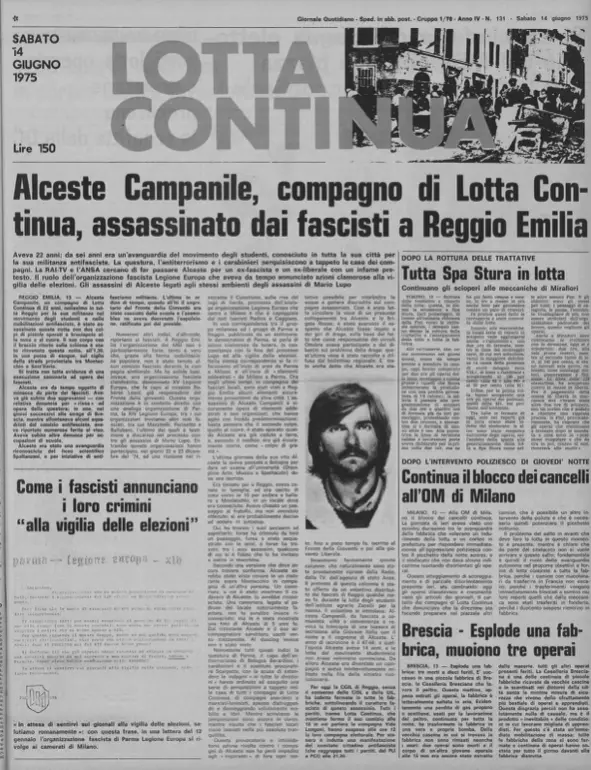
da La Bottega dei Barbieri
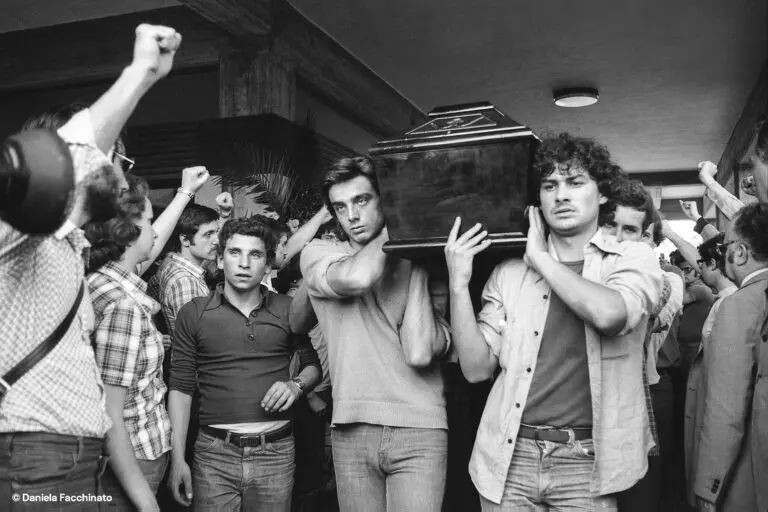
da Daniela Facchinato
English version
Alceste Campanile, 22 years old, student
“On the night of 12 June 1975, the young Lotta Continua exponent Alceste Campanile was shot dead with two shots. I knew him well. He was from Reggio Emilia and a student, like me, at the University of Bologna. We had played guitar together a few times, with a mutual friend. In some suburban dive, both immersed up to their necks in music and politics. He had just returned from an exam, which he passed brilliantly, he had left his university booklet under the door of his house and had headed towards a nightclub in Montecchio, between Parma and Reggio, very popular with young people. His body was found in a country road halfway between Sant’Ilario and Montecchio.
Alceste had played in the Youth Front, a far-right organisation, before joining Lotta Continua and the first sensation that pervaded us was that of the consummation of a ferocious fascist-style revenge towards a boy accused of treason. In the afternoon, a large demonstration was held, promoted by the anti-fascist committee, in which we young socialists fought, opposing the communists on this, so that the exponents of Lotta continua could also speak. On the day of the funeral, tens of thousands of Lotta Continua militants, with Adriano Sofri on the front line, held an impressive demonstration, however also praising the armed struggle.
Since then the judiciary has come across a wall of silence and suspicion, mainly animated by Alceste’s father, which was oriented towards the opposite side to that expected. In particular, in the extremist circles of Bologna, a recurring injunction to be careful was reported to the former Lotta continua leader Marco Boato, it was said, “otherwise you will end up like Alceste Campanile”. Responsibilities were sought especially in that area of armed extremism which was needed for the supervision of Lotta Continua, a close relationship was also hypothesized between the kidnapping and the Saronio and Alceste crimes. It was declared that part of the money would have passed through Reggio and Alceste itself.
Until 1999, no repentant person ever had something concrete to declare about the Campanile crime, unlike all the others. A very particular murder was therefore thought of. Then, precisely in 1999, Paolo Bellini, involved in mafia crimes, a far-right element, in cahoots with members of the deviant secret services, fled to Brazil and returned to Italy under a false name, after his arrest in a well-known restaurant in Reggio Emilia. , opened the case by confessing that it was he, together with one of his companions from the National Avant-garde, who killed Bellini on the orders of a third party, a well-known leader of the National Avant-garde. The motive once again became that of betrayal and that of an unsuccessful attack that Campanile allegedly plotted against the Bellinis’ home was added.
However, the other two implicated by Bellini were acquitted. Therefore, there remains an incomplete truth about him given that the guns that were fired were two. Assuming that Bellini told the truth, given that he did not even have to serve a sentence for the Campanile crime, because the 22-year period of the trial completed in 2007 has expired, and given that he had committed eight or nine crimes, certified and therefore even the years imposed would not have weighed down his position too much, many questions still remain.
