
Sergio Ramelli era un ragazzo milanese di 18 anni che come tanti suoi coetanei andava a scuola, usciva con gli amici; gli piaceva il calcio e lo giocava a livello di quartiere ed era un tifoso dell’Inter. Era il secondogenito di una famiglia composta dal padre Mario, dalla madre Anita, dal fratello Luigi di 20 anni e dalla sorella Simona di otto. Una vita tranquilla quella di Sergio, accanto alla sua fidanzatina Flavia.
Ma come tanti coetanei, Sergio Ramelli faceva politica e la faceva in maniera seria, poiché era iscritto al Fronte della Gioventù, l’organizzazione giovanile del MSI, di cui aveva la responsabilità per la zona dove abitava, Citta Studi. Ramelli era un “camerata” ed un “fascista”: un “camerata” per i suoi amici di partito, un “fascista” per quelli di sinistra.
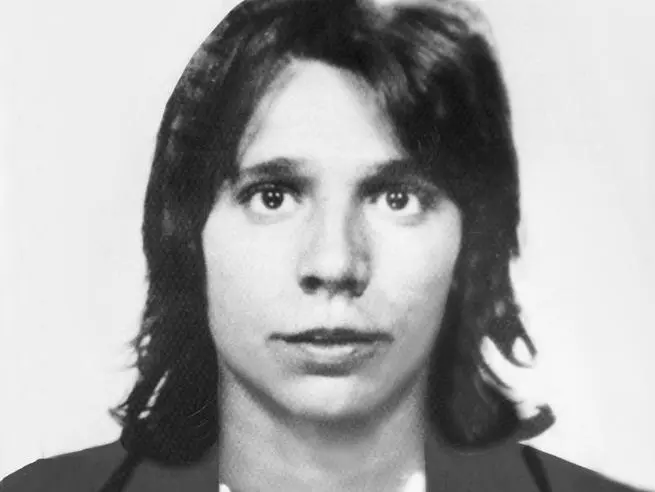
Nonostante fosse di destra, aveva i capelli lunghi alle spalle, un look inusuale per quella parte politica. Non era un fanatico, ma era contro i soprusi e la poca libertà di pensiero, come spesso ripeteva la madre, nei confronti di quelli che la pensavano come lui.
Ramelli, nell’anno scolastico 1974/1975, frequentava l’istituto tecnico industriale “Molinari, indirizzo chimico. La scuola aveva (e ha tuttora) sede in via Crescenzago, a circa 3 km di distanza da casa Ramelli ed era un istituto caratterizzato da tantissimi studenti vicini alla sinistra e ai movimenti extraparlamentari, in primis Avanguardia Operaia. Sergio aveva vita dura, essendo oggetto di vessazioni. Molti sapevano che era un militante missino, molti no.
Alcuni compagni di istituto una mattina entrarono nella V J, la classe si Ramelli, iniziarono a parlare di politica, prelevarono il ragazzo e lo portarono al di fuori, dove viene insultato e picchiato senza che nessuno muovesse un dito: Ramelli doveva essere “processato”. Anche se molti non mossero un dito in difesa del ragazzo per paura di ritorsioni.
A gennaio, il professore di lettere, Giorgio Melitton, assegnò, come compito in classe, un tema con oggetto l’attualità. Ramelli vi raccontò dell’omicidio di due militanti del MSI di Padova, Giuseppe Mazzola e Graziano Giralucci, uccisi il 17 giugno dell’anno prima dentro la sede del partito da un commando delle Brigate Rosse composto da cinque persone (di cui due materiali esecutori). Nei fogli, il giovane parlò del fatto che le BR avevano compiuto il loro primo delitto politico e nessuno in Italia (a parte gli stessi missini) aveva espresso cordoglio per l’uccisione dei due militanti padovani del partito della fiamma tricolore. Ramelli sapeva di toccare un tasto dolente, ma lui andò avanti per la sua strada.
Visto che il 1975 era un anno caldo, alcuni compagni di classe (e di istituto) di Ramelli fecero un passo oltre: fecero sparire il tema (rubandolo ad un compagno che doveva consegnarlo al docente) e lo affissero nella bacheca dell’istituto dove solitamente venivano evidenziate le varie comunicazioni della scuola. Accanto al tema, in bella mostra, c’era la scritta “Questo è il tema di un fascista”: tutta la scuola sapeva ora che Sergio Ramelli era un “fascista” e come tale deve essere trattato. E pensare che Ramelli era appena due mesi che faceva politica attiva.
Ramelli venne ancora di più vessato, canzonato e minacciato. Il 13 gennaio 1975 venne costretto con la forza, all’uscita da scuola, da parte di almeno 80 persone, a pulire con la vernice delle scritte fasciste sui muri del “Molinari”. Nell’azione dove veniva insultato, venne anche fotografato. Ovviamente non era stato lui ad imbrattare i muri, ma ai ragazzi che erano lì non interessava. A loro interessava punire il “fascista” Ramelli.
Anche a seguito di questo, il 3 febbraio 1975 il ragazzo decise di lasciare la scuola (..) Optò per un istituto privato dove avrebbe potuto terminare l’anno e conseguire la maturità. I genitori erano a conoscenza di quello che “professava” il figlio politicamente e temevano per la sua incolumità, ma lui disse sempre loro di non preoccuparsi.
Il 9 marzo 1975, poi, lui ed il fratello rimasero chiusi in un bar perché fuori ad aspettarli c’erano una ventina di persone che volevano malmenarli. Nessuno dei vertici del “Molinari” prese mai le difese di Sergio, un po’ per paura un po’ perché concordi con il trattamento riservatogli. Per non parlare del fatto che non ci furono inchieste della magistratura o interventi della polizia, mai chiamata in difesa del ragazzo.
Eppure, nonostante tutto, Sergio rimase fedele ai suoi ideali: non lasciò il “Fronte”, non perse i contatti con gli amici di partito e continuò la sua vita da militante missino in barba ai pericoli che poteva comportare l’essere “fascista”. Sergio Ramelli è stato forte, non si è mai lasciato intimorire dalla situazione e non ha mai fatto un passo indietro.
Fino a che non arrivarono le ore 13 di giovedì 13 marzo 1975.
Stava ritornando a casa, in via Amadeo a Milano; parcheggiato il suo motorino poco distante, in via Paladini, si incamminò verso casa.
All’altezza del civico 15 di via Paladini, fu assalito da un gruppo di extraparlamentari comunisti di Avanguardia operaia armati di chiavi inglesi, e con queste colpito più volte al capo; a seguito dei colpi perse i sensi e fu lasciato esangue al suolo. Gli aggressori, tra cui Marco Costa, Giuseppe Ferrari Bravo, Claudio Colosio, Antonio Belpiede, Brunella Colombelli, Franco Castelli, Claudio Scazza e Luigi Montinari. Provocarono numerosi traumi alla vittima, che morì il 29 aprile, oltre un mese e mezzo dopo l’aggressione.
I responsabili furono identificati dieci anni dopo l’accaduto e, dopo un’iniziale condanna per omicidio preterintenzionale in primo grado, furono riconosciuti colpevoli di omicidio volontario al termine dei tre gradi di giudizio del processo, durato da 1987 al 1990.
Fonti
Tuttostoria.net
Tutto storia autori: Quando la politica portava alla morte: il caso Sergio Ramelli
Il Riformista
Chi era Sergio Ramelli, vittima dei rossi citata da La Russa – Il Riformista
Approfondimenti
Rai Play
Cronache criminali 2022/23 – Anni ’70. La violenza politica – Video – RaiPlay
Wikipedia
Omicidio di Sergio Ramelli – Wikipedia
Video
Omicidio di Sergio Ramelli: parla uno degli aggressori
Sound
Rai Play Sound
Cronache criminali | S1E6 | Anni ’70. La violenza politica | RaiPlay Sound
Radio Radicale
Assassinio di Sergio Ramelli | Radio Radicale
Il Libro
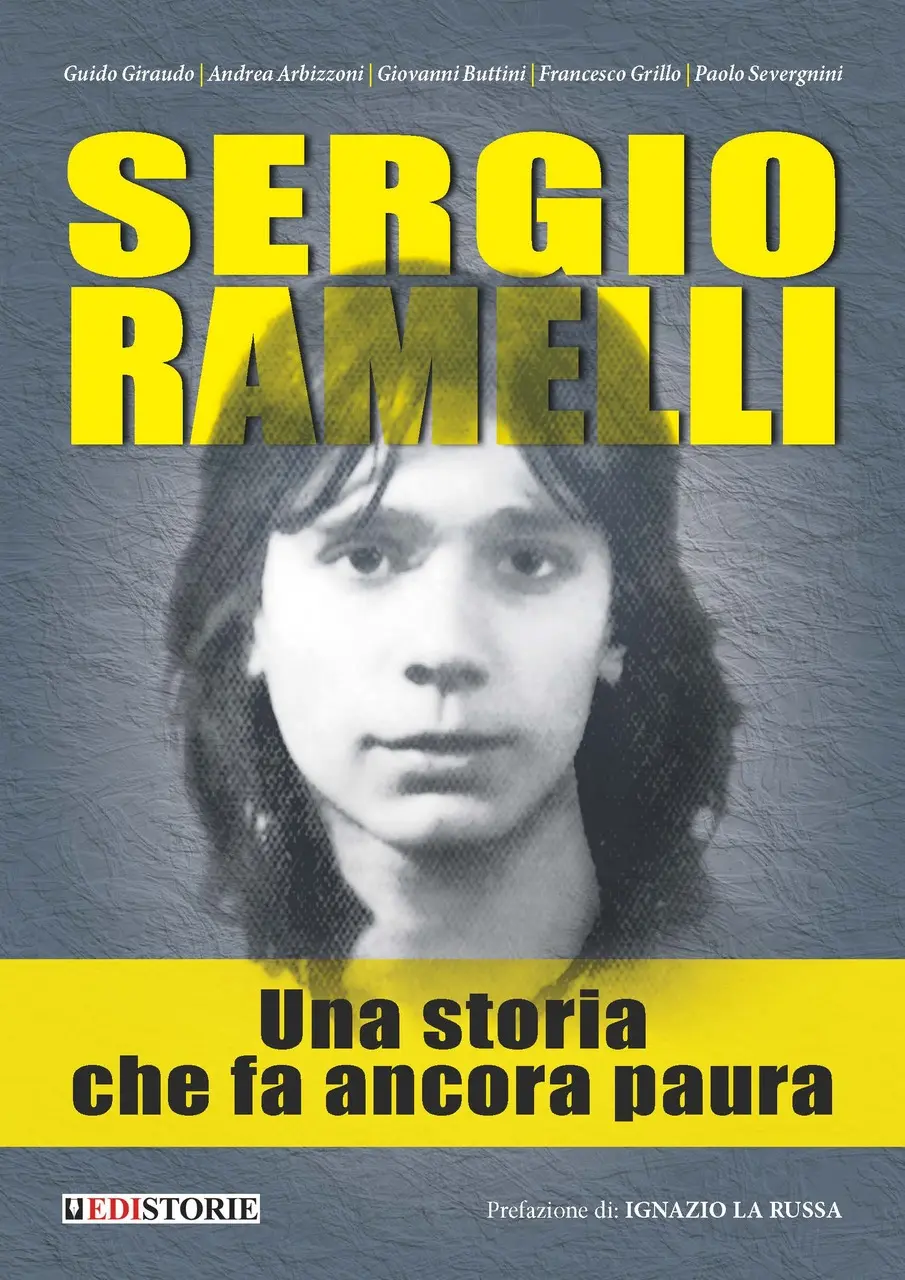
da Sergio Ramelli
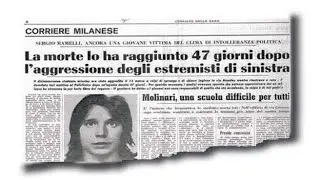
da il Corriere della Sera
English version
Sergio Ramelli, 18 years old, student
Sergio Ramelli was an 18-year-old Milanese boy who, like many of his peers, went to school and went out with his friends; he liked football and played it at neighborhood level and was an Inter fan. He was the second child of a family made up of his father Mario, his mother Anita, his 20-year-old brother Luigi and his eight-year-old sister Simona. Sergio’s life is peaceful, alongside his girlfriend Flavia.
But like many of his peers, Sergio Ramelli was involved in politics and he did it in a serious manner, since he was a member of the Youth Front, the youth organization of the MSI, for which he was responsible for the area where he lived, Citta Studi. Ramelli was a “comrade” and a “fascist”: a “comrade” for his party friends, a “fascist” for those on the left.
Although he was right-wing, he had shoulder-length hair, an unusual look for that political party. He was not a fanatic, but he was against abuse and little freedom of thought, as her mother often repeated, towards those who thought like him.
Ramelli, in the 1974/1975 school year, attended the “Molinari” industrial technical institute, chemical major. The school had (and still has) its headquarters in via Crescenzago, about 3 km away from the Ramelli house and was an institution characterized by many students close to the left and extra-parliamentary movements, primarily Avanguardia Operaia. Sergio had a hard life, being the subject of harassment. Many knew that he was a MSI militant, many did not.
One morning some classmates entered V J, Ramelli’s class, started talking about politics, picked up the boy and took him outside, where he was insulted and beaten without anyone lifting a finger: Ramelli had to be “tried”. Although many did not lift a finger in defense of the boy for fear of retaliation.
In January, the literature teacher, Giorgio Melitton, assigned a topic on current events as a class assignment. Ramelli told you about the murder of two militants of the MSI of Padua, Giuseppe Mazzola and Graziano Giralucci, killed on 17 June of the previous year inside the party headquarters by a commando of the Red Brigades made up of five people (two of whom were perpetrators) . In the papers, the young man spoke of the fact that the Red Brigades had committed their first political crime and no one in Italy (apart from the MSI themselves) had expressed condolences for the killing of the two Paduan militants of the Tricolor Flame party. Ramelli knew he was touching a sore spot, but he went his way.
Seeing as 1975 was a hot year, some of Ramelli’s classmates (and institute) took a step further: they made the essay disappear (stealing it from a classmate who had to deliver it to the teacher) and posted it on the institute noticeboard where it usually the various communications of the school were highlighted. Next to the theme, prominently displayed, was the writing “This is the theme of a fascist”: the whole school now knew that Sergio Ramelli was a “fascist” and must be treated as such. And to think that Ramelli had only been active in politics for two months.
Ramelli was even more harassed, mocked and threatened. On 13 January 1975 he was forcibly forced, as he left school, by at least 80 people, to clean up the fascist writings on the walls of the “Molinari” with paint. In the action where he was insulted, he was also photographed. Obviously he wasn’t the one who defaced the walls, but the kids who were there didn’t care. They were interested in punishing the “fascist” Ramelli.
Also following this, on 3 February 1975 the boy decided to leave school (..) he opted for a private institute where he could finish the year and obtain his high school diploma. The parents were aware of what their son “professed” politically and feared for his safety, but he always told them not to worry.
Then, on March 9, 1975, he and his brother remained locked in a bar because there were about twenty people waiting for them outside who wanted to beat them up. None of the “Molinari” leaders ever took Sergio’s defense, partly out of fear and partly so that they agree with the treatment reserved for him. Not to mention the fact that there were no judicial investigations or police interventions, who were never called to defend the boy.
Yet, despite everything, Sergio remained faithful to his ideals: he did not leave the “Front”, he did not lose contact with his party friends and continued his life as a MSI militant in spite of the dangers that being “fascist” could entail . Sergio Ramelli was strong, he never let himself be intimidated by the situation and never took a step back.
Until 1pm on Thursday 13 March 1975 arrived.
He was returning home, to via Amadeo in Milan; having parked his scooter not far away, in via Paladini, he set off towards home.
At number 15 of via Paladini, he was assaulted by a group of non-parliamentary communists of the workers’ vanguard armed with English keys, and with these hit several times at the head; as a result of the blows he lost consciousness and was left dead on the ground. The attackers, including Marco Costa, Giuseppe Ferrari Bravo, Claudio Colosio, Antonio Belpiede, Brunella Colombelli, Franco Castelli, Claudio Scazza and Luigi Montinari. They caused numerous traumas to the victim, who died on April 29, more than a month and a half after the assault.
The perpetrators were identified ten years after the incident and, after an initial conviction for pre-intentional murder at first instance, they were convicted of voluntary homicide at the end of the three degrees of judgment of the trial, which lasted from 1987 to 1990.
