
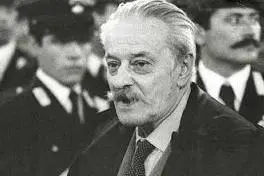
Nel 1968, titolare di uno dei più noti studi legali della città, è eletto presidente dell’Ordine di Torino, dopo esserne stato consigliere e segretario. È confermato nella carica ininterrottamente per 9 anni, fino al momento del suo assassinio. Proprio in qualità di presidente dell’Ordine, assume la difesa d’ufficio dei brigatisti rossi al processo di Torino iniziato nel 1976. Tra i brigatisti processati figurano Prospero Gallinari, Alberto Franceschini, Renato Curcio e Paolo Maurizio Ferrari. Perché ne assume la difesa?
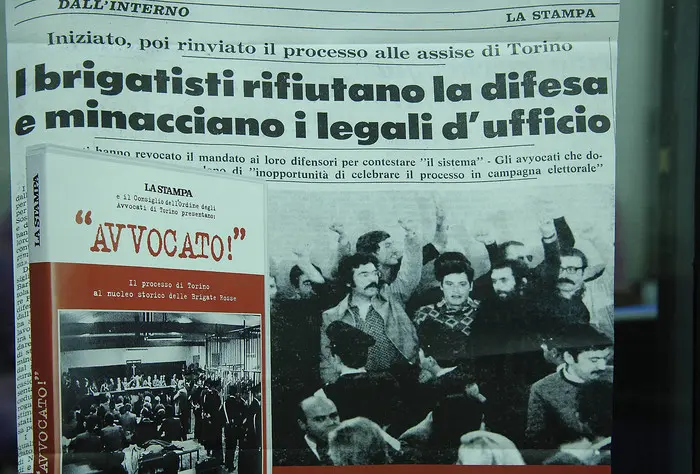
Durante il corso del processo accadde un episodio mai occorso in precedenza in Italia: tutti gli imputati detenuti revocarono il mandato ai loro difensori di fiducia e minacciarono di morte i legali che avessero accettato la nomina come difensori di ufficio.
Il 17 maggio 1976, data della prima udienza del processo, uno degli imputati, Maurizio Ferrari, a nome anche di tutti gli altri imputati detenuti, lesse un comunicato: “ci proclamiamo pubblicamente militanti dell’organizzazione comunista Brigate Rosse. E come combattenti comunisti ci assumiamo collettivamente e per intero la responsabilità politica di ogni sua iniziativa passata presente e futura. Affermando questo viene meno qualunque presupposto legale per questo processo. Gli imputati non hanno niente da cui difendersi. Mentre al contrario gli accusatori hanno da difendere la pratica criminale antiproletaria dell’infame regime che essi rappresentano. Se difensori, dunque, devono esservi, questi servono a voi egregie eccellenze. Per togliere ogni equivoco revochiamo perciò ai nostri avvocati il mandato per la difesa e li invitiamo, nel caso fossero nominati d’ufficio, a rifiutare ogni collaborazione con il potere […]”.
A seguito della revoca dei difensori di fiducia, il Presidente della Corte d’Assise di Torino, Dott. Guido Barbaro, richiese al Consiglio dell’Ordine degli Avvocati di Torino di indicare un elenco di nominativi di difensori d’ufficio per la difesa degli imputati e procedette alle nomine. Gli imputati, però, dichiararono che non intendevano accettare la nomina di difensori d’ufficio e fecero presente che “qualora i difensori accettassero la nomina saranno ritenuti come collaborazionisti del regime, con le conseguenze che ne potranno derivare”.
A seguito di quest’ultimo comunicato, i nuovi difensori d’ufficio nominati dalla Corte, in occasione della seconda udienza del 24 maggio 1976, rimisero a loro volta il mandato.
A questo punto, il presidente della Corte d’Assise, constatate le difficoltà di pervenire alla nomina di difensori, incaricò della difesa d’ufficio il Presidente del Consiglio dell’Ordine degli Avvocati di Torino, l’avvocato Fulvio Croce. Il Codice di procedura penale dell’epoca, infatti, prevedeva all’art. 130 che, qualora non fosse possibile reperire un difensore d’ufficio, il Presidente del Consiglio dell’Ordine degli Avvocati dovesse assumere questo incarico. Fulvio Croce, pur essendo un anziano avvocato civilista e pur essendo assolutamente consapevole dei gravissimi rischi a cui si esponeva, accettò l’incarico e scelse gli altri difensori tra i Consiglieri dell’Ordine con un provvedimento in cui spiegava che le ragioni delle delega erano da individuarsi nei possibili profili di incompatibilità nella difesa.
All’udienza del 25 maggio 1976 gli imputati riaffermarono il loro rifiuto della difesa leggendo un nuovo comunicato contenente minacce contro Fulvio Croce ed i legali da esso delegati:
“gli avvocati nominati dalla corte sono di fatto degli avvocati di regime. Essi non difendono noi, ma i giudici. In quanto parte organica ed attiva della contro-rivoluzione, ogni volta che prenderanno iniziative a nostro nome agiremo di conseguenza.”
Nel corso dell’udienza come pure nel corso della quarta udienza del 26 maggio 1976, ogni volta che i legali d’ufficio presero la parola furono insultati e minacciati.
Nel corso dell’udienza del 7 giugno 1976 l’avvocato Grande Stevens, d’intesa con i colleghi consiglieri dell’Ordine nominati difensori di ufficio, sollevò una eccezione preliminare di incostituzionalità dell’art. 130 del Codice di procedura penale, la norma che imponeva la obbligatorietà della difesa tecnica anche per l’imputato che la rifiutasse. Grande Stevens invocò la Convenzione europea per la salvaguardia dei diritti dell’uomo e delle libertà fondamentali che attribuisce il diritto all’imputato di scegliersi un difensore o difendersi da solo (art.6, comma 3 lett. c). In tal caso l’avvocato poteva essere chiamato non come difensore, ma come amicus curiae perché, nell’interesse della collettività, si riducesse il margine di errori nel processo: chiamato cioè come garante di legalità. In breve, Grande Stevens tentò di dimostrare che quello alla difesa è un diritto ma non un obbligo. Tuttavia la Corte d’Assise, forse anche sotto la spinta emotiva dell’omicidio del Procuratore della Repubblica Francesco Coco, ritenne manifestamente infondata l’eccezione di incostituzionalità e così Fulvio Croce e tutti i consiglieri dell’Ordine nominati difensori di ufficio portarono avanti il loro munus sotto la minaccia di morte dei loro assistiti.
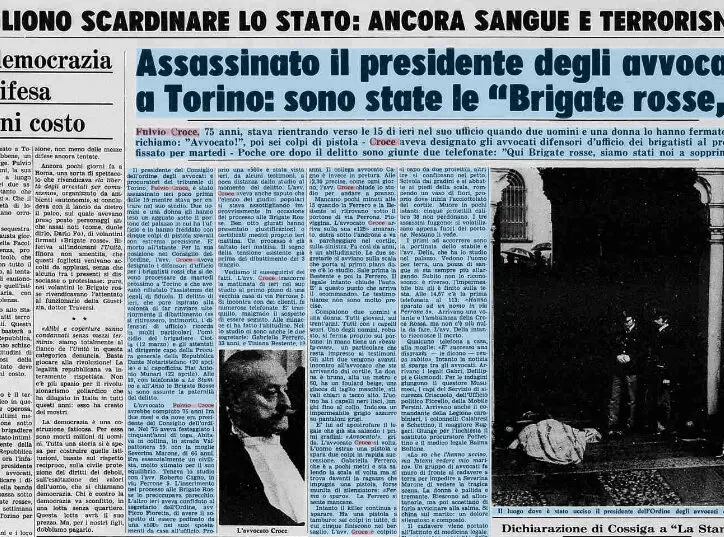
L’avvocato Fulvio Croce fu atteso nell’androne dello stabile ove aveva sede il suo studio in Torino, Via Perrone il pomeriggio del 28.04.1977 da un commando composto da due uomini e una donna e fu ucciso con cinque colpi di pistola. Mentre la donna del gruppo di aggressori, Angela Vai, allontanava le due segretarie, Rocco Micaletto, appoggiato da Lorenzo Betassa con funzione di copertura, si diresse rapidamente verso l’avvocato, lo chiamò ‘Avvocato!” e subito dopo gli sparò cinque colpi che lo raggiunsero mortalmente alla testa e al torace.
Subito dopo i brigatisti fuggirono su una 500 già in attesa con un quarto terrorista, Raffaele Fiore, alla guida.
I cinque proiettili partirono dalla stessa arma di costruzione cecoslovacca che sette mesi dopo avrebbe ucciso il giornalista de “La Stampa” Carlo Casalegno.
L’omicidio fu rivendicato dalle “Brigate Rosse” con una telefonata al quotidiano “La Stampa” e all’Ansa. L’uccisione dell’avv. Croce determinò un ulteriore grave stato di tensione che portò al rinvio del processo “per impossibilità di costituire una giuria popolare”. Il processo sarà ripreso tempo dopo, ma prima e durante la sua celebrazione altre persone verranno uccise: dagli investigatori Antonio Esposito e Rosario Berardi, al vicedirettore de “La Stampa”, Carlo Casalegno. Poco più di un mese prima dell’omicidio dell’avv. Fulvio Croce, era stato ucciso anche il brigadiere Giuseppe Ciotta, un altro degli investigatori direttamente coinvolti nell’istruttoria del processo.
Fonte
Ordineavvocatitorino.it
Chi è stato Fulvio Croce | Ordine Avvocati Torino
Approfondimento
Il Dubbio
28 aprile 1977: così moriva Fulvio Croce, che prima della vita mise il diritto
Video
Piemonte Memoria n. 3 – Torino di Piombo, gli anni drammatici del terrorismo
da il Dubbio
da Ansa
da Richex
English version
Fulvio Croce, 76 years old, lawyer, president of the Order of Lawyers and Prosecutors of Turin
In 1968, holder of one of the most famous law firms in the city, he was elected president of the Order of Turin, after being its advisor and secretary. He is confirmed in office continuously for 9 years, until the time of his assassination. Precisely in his capacity as president of the Order, he assumes the ex officio defense of the Red Brigadists at the Turin trial that began in 1976. Among the brigades tried are Prospero Gallinari, Alberto Franceschini, Renato Curcio and Paolo Maurizio Ferrari. Why does he take over the defense?
During the course of the trial, an episode that had never occurred before in Italy happened: all the defendants detained revoked the warrant from their trusted defenders and threatened with death the lawyers who had accepted the appointment as defenders of office.
On May 17, 1976, the date of the first hearing of the trial, one of the defendants, Maurizio Ferrari, also on behalf of all the other defendants detained, read a statement: “we publicly proclaim ourselves militants of the communist organization Red Brigades. And as communist fighters we collectively and fully assume political responsibility for all his past, present and future initiatives. By stating this, any legal assumption for this process is lost. The defendants have nothing to defend themselves against. While, on the contrary, the accusers have to defend the anti-proletarian criminal practice of the infamous regime they represent. If defenders, therefore, must be there, they serve you very good excellence. To remove any misunderstanding, we therefore withdraw the mandate for defense from our lawyers and invite them, if they are appointed ex officio, to refuse any collaboration with the power […]”.
Following the revocation of the defenders of trust, the President of the Court of Assizes of Turin, Dr. Guido Barbaro, asked the Council of the Turin Bar Association to indicate a list of names of ex officio defenders for the defense of the accused and proceeded to the appointments. The defendants, however, declared that they did not intend to accept the appointment of ex officio defenders and pointed out that ‘if the defenders accept the appointment they will be considered as collaborators of the regime, with the consequences that may result’.
Following the latter communiqué, the new defenders of officio appointed by the Court, at the second hearing on 24 May 1976, in turn postponed their mandate.
At this point, the President of the Court of Assizes, noting the difficulties of reaching the appointment of defenders, commissioned the President of the Council of the Turin Bar Association, the lawyer Fulvio Croce, to defend its own motion. The Code of Criminal Procedure of the time, in fact, provided in Article 130 that, if it was not possible to find an ex officio defender, the President of the Council of the Bar Association should assume this office. Fulvio Croce, despite being a senior civil lawyer and while being absolutely aware of the very serious risks to which he was exposed, accepted the position and chose the other defenders among the Councilors of the Order with a measure in which he explained that the reasons for the delegation were to be identified in the possible profiles of incompatibility in the defense.
At the hearing on May 25, 1976, the defendants reaffirmed their rejection of the defense by reading a new statement containing threats against Fulvio Croce and the lawyers delegated by him:
“The lawyers appointed by the court are in fact regime lawyers. They do not defend us, but the judges. As an organic and active part of the counter-revolution, whenever they take initiatives on our behalf we will act accordingly.”
During the hearing as well as during the fourth hearing on May 26, 1976, every time the ex officio lawyers took the floor they were insulted and threatened.
During the hearing of June 7, 1976, lawyer Grande Stevens, in agreement with fellow councilors of the Order appointed defenders of office, raised a preliminary exception of unconstitutionality of art. 130 of the Code of Criminal Procedure, the rule that imposed the mandatory technical defense even for the accused who refused it. Grande Stevens invoked the European Convention for the Protection of Human Rights and Fundamental Freedoms which gives the defendant the right to choose a defender or to defend himself (Article 6(3)(c)). In this case, the lawyer could be called not as a defender, but as amicus curiae so that, in the interest of the community, the margin of errors in the process would be reduced: that is, called as a guarantor of legality. In short, Grande Stevens attempted to prove that defense is a right but not an obligation. However, the Court of Assize, perhaps even under the emotional thrust of the murder of the Public Prosecutor Francesco Coco, considered the exception of unconstitutionality manifestly unfounded and so Fulvio Croce and all the councilors of the Order appointed defenders of office carried on their munus under the threat of death of their clients.
The lawyer Fulvio Croce was waited for in the hall of the building where his studio was based in Turin, Via Perrone on the afternoon of 28.04.1977 by a commando composed of two men and a woman and was killed with five gunshots. While the woman in the group of attackers, Angela Vai, drove away the two secretaries, Rocco Micaletto, supported by Lorenzo Betassa with a cover function, quickly headed for the lawyer, called him ‘Lawyer!’ And immediately after he fired five shots that hit him fatally in the head and chest.
Immediately after, the brigadists fled on a 500 already waiting with a fourth terrorist, Raffaele Fiore, at the helm.
The five bullets started from the same Czechoslovak construction weapon that seven months later would have killed the journalist of “La Stampa” Carlo Casalegno.
The murder was claimed by the ‘Red Brigades’ with a phone call to the newspaper ‘La Stampa’ and the Ansa. The killing of the lawyer Croce resulted in a further serious state of tension that led to the postponement of the trial ‘for the impossibility of constituting a popular jury’. The trial will be resumed some time later, but before and during its celebration other people will be killed: from investigators Antonio Esposito and Rosario Berardi, to the deputy director of “La Stampa”, Carlo Casalegno. A little more than a month before the murder of lawyer Fulvio Croce, Brigadier Giuseppe Ciotta, another of the investigators directly involved in the investigation of the trial, had also been killed.
