
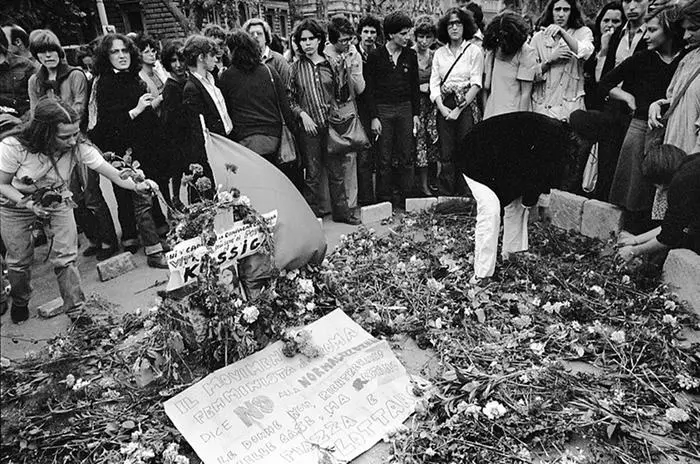
Roma, 12 maggio 1977. Una ragazza cade colpita da un proiettile al centro di un incrocio, mentre scappa verso Trastevere. Dall’altra parte, sul ponte Garibaldi, sono attestate le forze dell’ordine. Lei si accascia. La soccorrono. Non c’è sangue né bossoli. Fermano un’auto. La portano in ospedale. Il medico del pronto soccorso constata la morte. Giorgiana Masi fu uccisa da un proiettile blindato sparato da notevole distanza che la trapassò da parte a parte alle 8 di sera. Alla fine di una giornata di violenze scaturite da una manifestazione pacifica del Partito radicale. Era il 12 maggio. Pannella e i suoi volevano celebrare il terzo anniversario della vittoria al referendum sul divorzio e raccogliere firme per altri referendum. Cossiga, ministro degli interni, aveva vietato ogni manifestazione a Roma, dopo l’uccisione dell’allievo sottufficiale di Ps Settimio Passamonti, avvenuta durante gli scontri del 21 aprile, iniziati all’università (affianco alla chiazza del suo sangue comparirà, sull’asfalto, la scritta: “Qui c’era un caramba, il compagno Lorusso è vendicato”). Il centro di Roma era blindato da 1.800 uomini. Pannella non aveva accettato il divieto, che di fatto sospendeva la Costituzione nella capitale per un mese. “È un dovere disobbedire a ordini ingiusti”, aveva detto nel corso di una drammatica seduta parlamentare, mentre per strada divampavano gli scontri.
Era col fidanzato, Giorgiana. Voleva andare a firmare in piazza Navona per i referendum radicali nel primo pomeriggio e poi godersi la giornata di sole. Trovò la zona militarizzata e ogni accesso vietato. Persino i deputati radicali erano stati respinti dal formidabile dispiegamento di poliziotti e carabinieri. Mimmo Pinto di Lotta continua, eletto deputato per Democrazia proletaria, era stato spintonato, buttato in terra e dileggiato dai tutori dell’ordine. Giorgiana, che aveva rassicurato i suoi (padre barbiere, madre casalinga) dicendo che era abbastanza accorta e che non si sarebbe fatta coinvolgere in incidenti (erano all’ordine del giorno) va a zonzo per la città, cercando altri accessi verso i banchetti delle firme, svicolando tra i numerosi focolai di scontri, accesi da cariche della polizia e da resistenze degli autonomi, tra i dintorni di piazza Navona e fino al lungotevere. Nella sua borsetta sarà trovato, tra le altre cose, un panino.
Poi capita alla fine di ponte Garibaldi, verso piazza Belli e Trastevere, nel momento in cui polizia e carabinieri hanno appena smantellato una barricata e stanno ingaggiando una lotta con i manifestanti, attestati verso Trastevere. Un giovane carabiniere è stato raggiunto di striscio da un colpo di arma da fuoco. Due giovani, Francesco Lacanale e Elena Ascione, vengono colpiti più o meno nello stesso tempo in cui viene ferita mortalmente Giorgiana.
Vari testimoni dichiarano che gli spari arrivano dalla parte delle forze dell’ordine. Eppure le armi in dotazione ai reparti non hanno sparato, sarà dichiarato dai dirigenti e accertato come verità giudiziaria. Da testimonianze visive di fotoreporter dei giornali e da varie altre fonti emerge che dal lato di poliziotti e carabinieri in divisa c’erano vari individui in borghese armati. Tutto il pomeriggio, a partire dai primi fuochi accesi in piazza della Cancelleria, dalle parti di Campo dei Fiori. Nei vari scatti viene anche riconosciuto un poliziotto, Giovanni Santone, in maglietta bianca con una riga nera e tascapane da “autonomo”. Qui la situazione inizia a confondersi. Il ministro Cossiga in una prima dichiarazione parlamentare negherà la presenza di militari in borghese. Poi, di fronte alle prove fotografiche, le ammette, dichiarando che si trattava di elementi in servizio per segnalare reati, non tenuti a intervenire. Chi ha sparato?
Domande rimaste senza risposta.
L’inchiesta sulla sua morte verrà chiusa il 9 maggio 1981. Il giudice istruttore scriverà: «Impossibilità a procedere poiché rimasti ignoti i responsabili del reato».
Quando l’istruttoria è chiusa l’avvocato Boneschi è l’unico a finire sul banco degli accusati. Ha commentato la sentenza riproponendo le domande inevase, le foto, i filmati, i bossoli ritrovati di armi in dotazione alle forze dell’ordine, le ricostruzioni dei periti della polizia sbugiardate e quelle degli esperti di parte con la dimostrazione che un proiettile sparato dalla parte del ponte occupata dai tutori della legge trapassò la schiena di Giorgiana. Il suo ragionamento, il suo sfogo a voce, è stato trasformato in una dichiarazione dal Partito radicale, in accusa scritta contro il giudice istruttore di non essere andato in fondo. Per potere sostenere la sua posizione nel processo seguente per diffamazione, intentatogli dal giudice D’Angelo, non accetta l’elezione a deputato, rinunciando a trincerarsi dietro l’immunità parlamentare.
La vicenda è grottesca e penosa. tanti gradi di giudizio, con sentenze contraddittorie, fino a una condanna civile definitiva per calunnia nei confronti del giudice nel 2008, l’unica verità giudiziaria certa decenni dopo.
Fonte
Doppiozero.com
Giorgiana Masi, la vera storia di un mistero italiano | Massimo Marino
Approfondimenti
Raicultura.it
Muore Giorgiana Masi | Storia | Rai Cultura
Wikipedia
Omicidio di Giorgiana Masi – Wikipedia
La canzone
Canzoni contro la guerra – Giorgiana Masi [12 Maggio 1977]
Video
Rai Play
Ossi di Seppia – S3E7 – Giorgiana Masi, morte di una studentessa – Video – RaiPlay
Tribuna Pannella 1977 – A “Tribuna Politica” dopo l’uccisione di Giorgiana Masi – Video – RaiPlay
Giorgiana Masi. Indagine su un mistero italiano. Il libro di Concetto Vecchio
Sound
Radio radicale
12 maggio 1977: L’assassinio di Giorgiana Masi
Il libro
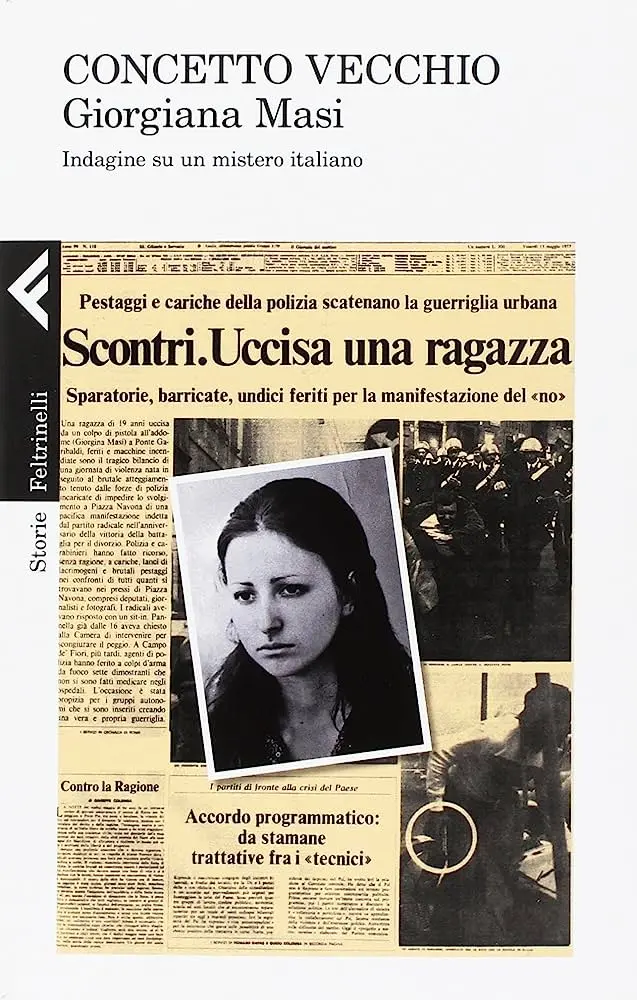

da Wikipedia
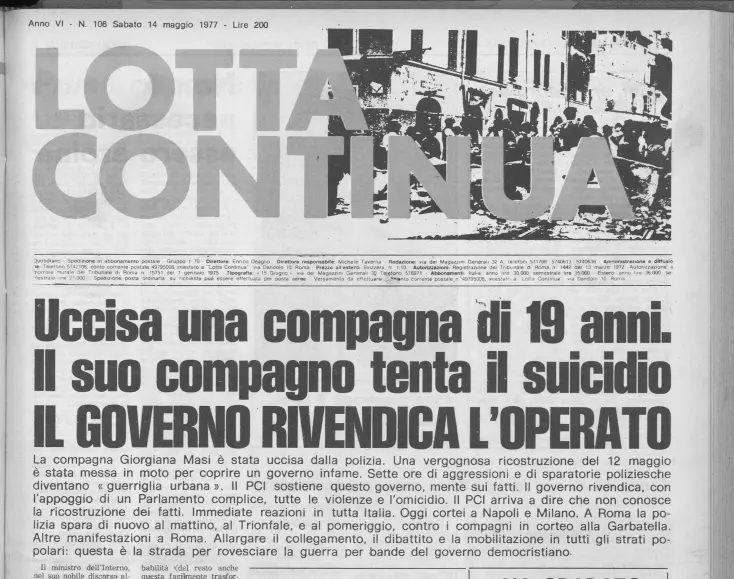
da Sinistra anticapitalista
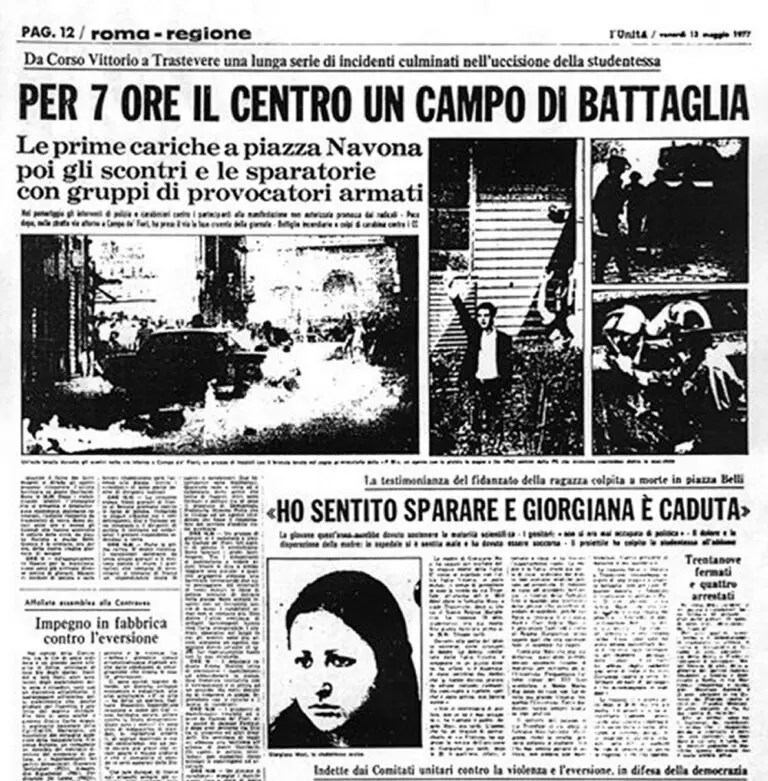
da Rerum Romanarum
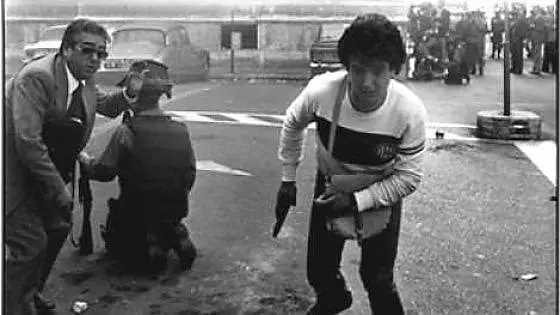
da La Repubblica
da Wikipedia
English version
Giorgiana Masi, 18 years old, student
Rome, May 12, 1977. A girl falls hit by a bullet in the middle of an intersection, as she escapes towards Trastevere. On the other hand, on the Garibaldi bridge, the police are attested. She is croasing. They help her. There is no blood or shells. They stop a car. They take her to the hospital. The emergency room doctor finds the death. Giorgiana Masi was killed by an armored bullet fired from a considerable distance that pierged her from side to side at 8 p.m. At the end of a day of violence arising from a peaceful demonstration by the Radical Party. It was May 12th. Pannella and his people wanted to celebrate the third anniversary of winning the divorce referendum and collect signatures for more referendums. Cossiga, Minister of the Interior, had banned any demonstration in Rome, after the killing of the non-commissioned student of Ps Settimio Passamonti, which took place during the clashes of April 21, which began at the university (next to the smear of his blood will appear, on the asphalt, the inscription: “There was a caramba here, Comrade Lorusso is avenged”). The center of Rome was armored by 1,800 men. Pannella had not accepted the ban, which in fact suspended the Constitution in the capital for a month. ‘It is a duty to disobey unjust orders,’ he had said during a dramatic parliamentary session, while clashes flared up on the street.
She was with her boyfriend, Giorgiana. He wanted to go and sign in Piazza Navona for the radical referendums in the early afternoon and then enjoy the sunny day. He found the zone militarized and all access prohibited. Even the radical deputies had been rejected by the formidable deployment of policemen and carabinieri. Mimmo Pinto of Lotta continua, elected deputy for proletarian democracy, had been pushed, thrown into the ground and misled by the guardians of the order. Giorgiana, who had reassured her (barber father, housewife mother) saying that she was quite shrewd and that she would not get involved in accidents (they were on the agenda of the day) goes around the city, looking for other access to the signature banquets, clearing between the numerous foci of clashes, lit by police charges and resistance of the self-employed, in the surroundings of Piazza Navona and up to the “lungo Tevere”. In his handbag you will find, among other things, a sandwich.
Then it happens at the end of the Garibaldi bridge, towards Piazza Belli and Trastevere, at the moment when the police and carabinieri have just dismantled a barricade and are embarking on a fight with the protesters, attested towards Trastevere. A young carabiniere was smeared by a gunshot. Two young people, Francesco Lacanale and Elena Ascione, are hit more or less at the same time that Giorgiana is mortally injured.
Various witnesses declare that the shots come from the side of law enforcement. Yet the weapons supplied to the wards have not been fired, it will be declared by the managers and ascertained as judicial truth. Visual testimonies of newspaper photojournalists and various other sources show that on the side of policemen and carabinieri in uniform there were various individuals in armed plainclothes. All afternoon, starting from the first fires lit in Piazza della Cancelleria, in the parts of Campo dei Fiori. In the various shots is also recognized a policeman, Giovanni Santone, in a white t-shirt with a black line and a ‘autonomous’ pocket. Here the situation is starting to get confused. Minister Cossiga in a first parliamentary statement will deny the presence of plainclothes military personnel. Then, in front of the photographic evidence, he admits them, declaring that they were elements in service to report crimes, not required to intervene. Who shot?
Questions remained unanswered.
The investigation into his death will be closed on May 9, 1981. The investigating judge will write: ‘Impossibility to proceed because those responsible for the crime have remained unknown’.
When the investigation is closed, lawyer Boneschi is the only one to end up in the desk of the accused. He commented on the sentence by re-proposing the unanswered questions, the photos, the videos, the found cases of weapons supplied to the police, the reconstructions of the denous police experts and those of the party experts with the demonstration that a bullet fired on the side of the bridge occupied by the guardians of the law pierced Giorgiana’s back. His reasoning, his outburst, was turned into a statement by the Radical Party, in a written charge against the investigating judge of not going to the bottom. In order to be able to support his position in the following defamation trial, brought to him by Judge D’Angelo, he does not accept the election as a deputy, renouncing to entrench himself behind parliamentary immunity.
The story is grotesque and painful. so many degrees of judgment, with contradictory sentences, up to a definitive civil conviction for slander against the judge in 2008, the only judicial truth certain decades later.
