
L'omicidio di Antonio Custra venne commesso a Milano il 14 maggio 1977 (la morte sopravvenne in realtà alle prime ore del giorno successivo al Policlinico di Milano ove il sottufficiale era stato ricoverato in condizioni disperate, come riportato sia dal Corriere della Sera che dalla rivista Fiamme d'Oro. Per protestare contro l'arresto di due avvocati, Giovanni Cappelli e Sergio Spazzali, iscritti a Soccorso Rosso Militante, due giorni dopo l'accaduto, il 14 maggio a Milano fu indetta una manifestazione da parte di alcuni militanti appartenenti a organizzazioni della sinistra extraparlamentare. Intorno alle 17:00 il corteo di manifestanti provenienti dal carcere di San Vittore e diretti in piazza del Duomo, una volta giunto nei pressi di via De Amicis, venne intercettato dagli agenti della celere.
In breve tempo la manifestazione degenerò in una vera e propria battaglia e gli autonomi iniziarono ad aprire il fuoco contro gli agenti. L'agente Custra, schierato con il resto del suo reparto, venne colpito al volto da uno dei proiettili esplosi con una pistola Beretta 7,65 dagli autonomi, che gli trapassò la visiera del casco, uccidendol.
Durante la manifestazione, grazie alla presenza di diversi fotografi, vennero scattate alcune foto che furono poi pubblicate nei giorni successivi da tutti i quotidiani del tempo. Una tra tutte, che mostrava un autonomo, Giuseppe Memeo, nell'atto di impugnare a due mani una pistola, puntata ad altezza d'uomo, divenne uno dei simboli della violenza di strada degli anni di piombo e della degenerazione dello scontro politico, che passò dalle manifestazioni di piazza alle bombe Molotov e all'uso delle armi da fuoco.
Dieci anni dopo, partendo da quella foto, fu riaperta l'inchiesta e individuato il colpevole in Mario Ferrandi, militante di sinistra, passato poi nelle file di Prima Linea e infine dissociatosi, che venne condannato per concorso in omicidio del vicebrigadiere. Per concorso morale nell'omicidio, vennero condannati anche Giuseppe Memeo e Walter Grecchi, a 14 anni di carcere. Dopo essere stato condannato e aver espiato 4 anni di carcere di massima sicurezza in Italia, Grecchi, che si è riconosciuto in uno dei giovani mascherati fotografati, ma ha sempre sostenuto di non aver mai sparato, vive latitante in Francia.
Nel febbraio 2012 Maurizio Azzollini, un altro degli uomini identificati tra quelli mascherati e fotografati quel giorno nell'atto di sparare verso gli agenti, è divenuto uno stretto collaboratore del vicesindaco di Milano Maria Grazia Guida. Un quinto autonomo, coinvolto e condannato a 15 anni, Pietro Mancini, fuggì in Brasile e nel 2009 ottenne la prescrizione del reato dalla Corte d'assise di Milano. Dopo trent'anni dal fatto Ferrandi ha incontrato a Milano, sul luogo della sparatoria, la figlia dell'agente ucciso, Antonia. Antonia era una che voleva capire. Senza segreti, senza omissioni, senza barare. S’era trovata orfana prima di nascere, a San Giorgio a Cremano. E sua madre, che era andata al funerale con il pancione, vestita di nero, e s’è confinata in casa, aveva scelto per lei il nome del padre: «Quel proiettile ha ammazzato papà, mamma, che è un fiore appassito, e me, che sono nata già morta, con una vita colorata di nero». Eppure, in qualche modo, «Antonia aveva saputo ritrovare i colori», come dice l’ex terrorista Mario Ferrandi. «È una che ha combattuto a fondo, anche contro la malattia. E ha lottato anche per lavorare in polizia, come suo padre. Era spazzina e s’è data da fare, concorso dopo concorso. Ho saputo della sua morte da Facebook. Qualche volta ci sentivamo, e sarà una frase fatta, ma che muoia a 40 anni una come lei è davvero un’ingiustizia ». Che a ricordare così Antonia, figlia di una vittima degli “anni di piombo”, possa essere uno con il passato di Ferrandi può far fastidio. Ma è anche attraverso l’ex terrorista — che aveva 21 anni e il nome in codice “Coniglio” quando il suo “Collettivo Romana” sparò e uccise — che si può comprendere meglio la scelta di Antonia. E anche un pezzo della nostra storia. C’è da fare un salto sempre nel passato, ma più recente, nella primavera del 2007. C’è un’altra foto, si vedono Ferrandi, che allora aveva passato i 50, era stato in carcere, e viveva di lavori precari, e la trentenne Antonia che s’incontrano in via De Amicis. Proprio nei luoghi della morte, e delle pallottole. Era stato Mario Calabresi, che stava scrivendo “Spingendo la notte più in là”, a raccontare alla ragazza i nuovi dettagli giudiziari della tragedia e per Antonia era stato come aprire una diga. Del papà non aveva niente, se non il peso a volte insopportabile dell’assenza, più di contorno «qualche nome da odiare». Si destreggiava tra anoressia e bulimia, una giovinezza complicata, ma «volevo guarire». E l’occasione era arrivata nel modo più inatteso: con una telefonata in un programma tv, favorita da don Antonio Mazzi, che era stato il primo “datore di lavoro” di Ferrandi. Era sbocciata così, in pubblico, una proposta vagamente assurda. Ma Antonia e quello che era stato “Coniglio” ci avevano creduto. Ed erano andati insieme sulla scena del crimine, e lì la figlia di Antonio aveva provato «un fortissimo dolore», ma anche — sono parole sue — «papà accanto a me». Per quanto tutto sia stato e possa essere complicatissimo e indicibile, Antonia ha voluto concludere quell’incontro esagerato e cruciale regalando all’ex terrorista una foto del padre. Non in divisa, ma da giovane sposo sorridente. «Ce l’ho, ci mancherebbe, io so che noi le abbiamo strappato il papà e lei mi ha regalato del gran bene, e almeno sono riuscito a dirglielo, che era una grande anima». Non stupirà sapere che quando Ferrandi ha chiesto e ottenuto la “riabilitazione”, Antonia ha dato il suo parere favorevole ai giudici: «So che i terroristi non hanno ucciso per soldi, o per un tornaconto, ma per ideali sbagliati, non voglio più odiare, so che alcuni sono cambiati davvero». A non essere sconfitto, si sa, a volte è il cancro: e così è successo ad Antonia, nel 2017, a soli quarant’anni.
Fonti
Wikipedia
Omicidio di Antonio Custra - Wikipedia
Associzionememoria.it
Approfondimenti
Ugo Maria Tassinari
14 maggio 1977. Il racconto di Mario Ferrandi: così ho ucciso Antonio Custra
Il Giornale
Video
TV2000
Beati Voi La Genesi - Mario Ferrandi
Salvini: così ho dato giustizia al poliziotto Custra
Il libro
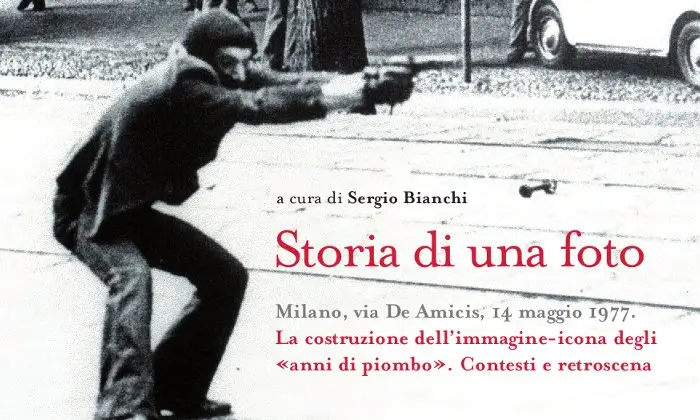
da Radio Sherwoof
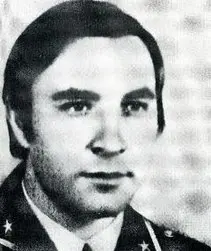
da Wikipedia
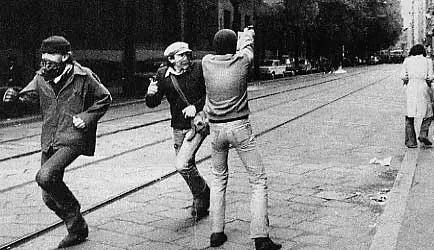
da Wikipedia
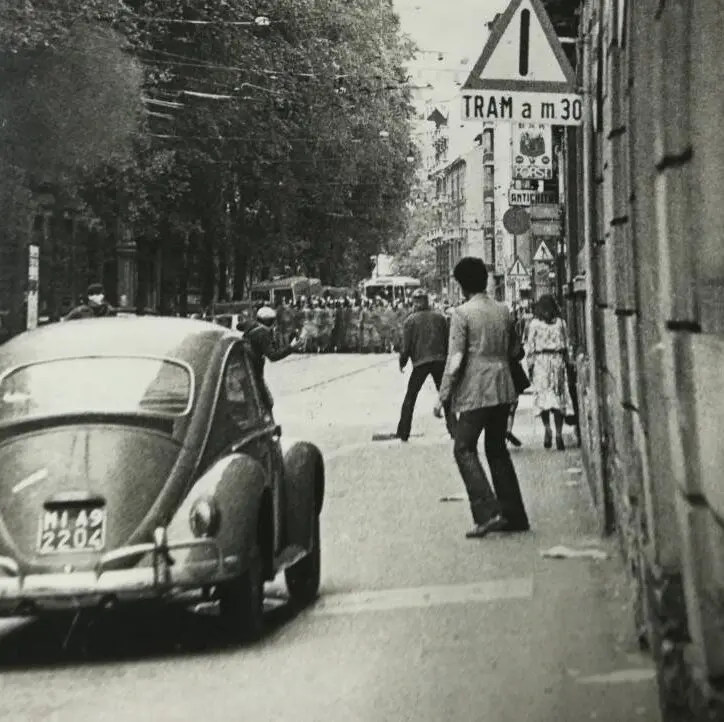
da Il Giornale
English version
Antonio Custra, 25 years old, Deputy Brigadier of Public Security
The murder of Antonio Custra was committed in Milan on May 14, 1977 (the death actually occurred in the early hours of the following day at the Policlinico di Milano where the non-commissioned officer had been hospitalized in desperate condition, as reported by both Corriere della Sera and the magazine Fiamme d’Oro. To protest against the arrest of two lawyers, Giovanni Cappelli and Sergio Spazzali, enrolled in Soccorso Rosso Militante, two days after the incident, on May 14 in Milan a demonstration was called by some militants belonging to organizations of the extra-parliamentary left. Around 17:00 the procession of protesters coming from the San Vittore prison and heading to Piazza del Duomo, once they arrived near Via De Amicis, was intercepted by the agents of the celere.
In a short time the demonstration degenerated into a real battle and the autonomous began to open fire on the officers. Agent Custra, lined up with the rest of his department, was hit in the face by one of the bullets exploded with a Beretta pistol 7.65 by the autonomous, who pierced the visor of his helmet, killing him.
During the event, thanks to the presence of several photographers, some photos were taken which were then published in the following days by all the newspapers of the time. One of all, which showed an autonomous, Giuseppe Memeo, in the act of holding with two hands a gun, pointed at the height of a man, became one of the symbols of the street violence of the years of lead and the degeneration of the political clash, which went from the street demonstrations to Molotov bombs and the use of firearms.
Ten years later, starting from that photo, the investigation was reopened and the culprit was identified in Mario Ferrandi, a left-wing militant, then passed into the ranks of the First Line and finally dissociated, who was convicted of competition in the murder of the vice brigadier. For moral competition in the murder, Giuseppe Memeo and Walter Grecchi were also sentenced to 14 years in prison. After being convicted and atone for 4 years of maximum security prison in Italy, Grecchi, who recognized himself in one of the young masks photographed, but always claimed to have never shot, lives a fugitive in France.
In February 2012, Maurizio Azzollini, another of the men identified among those masked and photographed that day in the act of shooting at the agents, became a close collaborator of the deputy mayor of Milan Maria Grazia Guida. A fifth self-employed person, involved and sentenced to 15 years, Pietro Mancini, fled to Brazil and in 2009 obtained the statute of limitations by the Court of Assizes of Milan. Thirty years after the fact, Ferrandi met in Milan, at the scene of the shooting, the daughter of the murdered agent, Antonia. Antonia was one who wanted to understand. Without secrets, without omissions, without cheating. She had found herself an orphan before being born, in San Giorgio a Cremano. And her mother, who had gone to the funeral with her belly, dressed in black, and confined herself to the house, had chosen her father’s name for her: ‘That bullet killed dad, mom, who is a withered flower, and me, who was born already dead, with a life colored black.’ Yet, in some way, ‘Antonia had been able to find the colors again’, as former terrorist Mario Ferrandi says. ‘She is one who fought thoroughly, even against the disease. And he also struggled to work in the police, like his father. She was a scavenger and she was busy, competition after competition. I learned of his death from Facebook. Sometimes we talked, and it will be a phrase made, but that she dies at 40, one like her is really an injustice.’ That to remember Antonia, daughter of a victim of the ‘years of lead’, she can be one with Ferrandi’s past can be annoying. But it is also through the former terrorist — who was 21 years old and the code name ‘Rabbit’ when his ‘Collective Romana’ shot and killed — that one can better understand Antonia’s choice. And also a piece of our history. There is always a leap to the past, but more recent, in the spring of 2007. There is another photo, you can see Ferrandi, who had then passed 50, had been in prison, and lived on precarious jobs, and the thirty-year-old Antonia who meet in via De Amicis. Right in the places of death, and bullets. It was Mario Calabresi, who was writing ‘Spindo la notte further’, who told the girl the new judicial details of the tragedy and for Antonia it had been like opening a dam. He had nothing about his father, other than the sometimes unbearable weight of the absence, more of a ‘some name to hate’ side. He juggled anorexia and bulimia, a complicated youth, but I ‘wanted to heal’. And the opportunity had come in the most unexpected way: with a phone call on a TV program, favored by Don Antonio Mazzi, who had been the first ‘employer’ of Ferrandi. A vaguely absurd proposal had bloomed like this, in public. But Antonia and what had been ‘Rabit’ had believed it. And they had gone together to the crime scene, and there Antonio’s daughter had felt ‘a very strong pain’, but also – these are his words – ‘dad next to me’. As much as everything was and can be very complicated and unspeakable, Antonia wanted to end that exaggerated and crucial meeting by giving the former terrorist a photo of her father. Not in uniform, but as a smiling young groom. ‘I have it, God forbid, I know that we snatched her dad and she gave me great good, and at least I managed to tell her, that she was a great soul.’ It will not be surprising to know that when Ferrandi asked for and obtained ‘rehabilitation’, Antonia gave her favorable opinion to the judges: ‘I know that the terrorists did not kill for money, or for a gain, but for wrong ideals, I do not want to hate anymore, I know that some have really changed.’ Not to be defeated, you know, is sometimes cancer: and so it happened to Antonia, in 2017, at just forty years old.
